
Editorials
Paperbacks from Hell: 5 Horror Films Based on ’70s and ’80s Pulp Fiction
The horror novels of the ’70s and ’80s are remembered for their grotesque cover artwork. Though many of those books have faded into obscurity, some managed to receive film adaptations, such as these five horror movies.

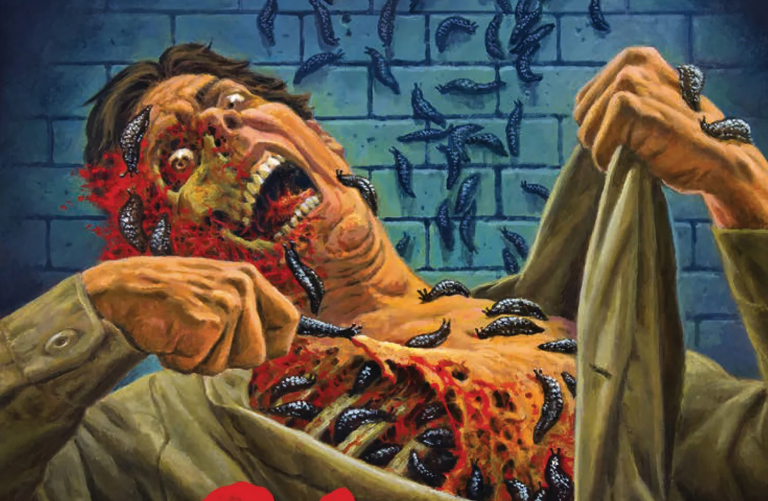
Horror movies based on novels are nothing new. Between literary classics like Dracula and Frankenstein to Stephen King’s entire bibliography, some of the greatest pieces of horror cinema find their origin on the page. But for every famed adaptation there’s just as many movies you didn’t know were based on books — and maybe that’s because their sources lean more obscure.
Just as the 1970s and ’80s contained some of the genre’s most iconic films, these two decades saw a slew of horror novels being released on the shelves. One only had to visit their local supermarket to pick up the latest cheap paperback. Today, these are the kinds of novels regarded more for their cover art than the stories themselves. Featuring images of skeletons, giant bugs, and grotesque creatures, the horror books of the ’70s and ’80s drew in readers with these garish covers, like the literary equivalent of a poster at Blockbuster.
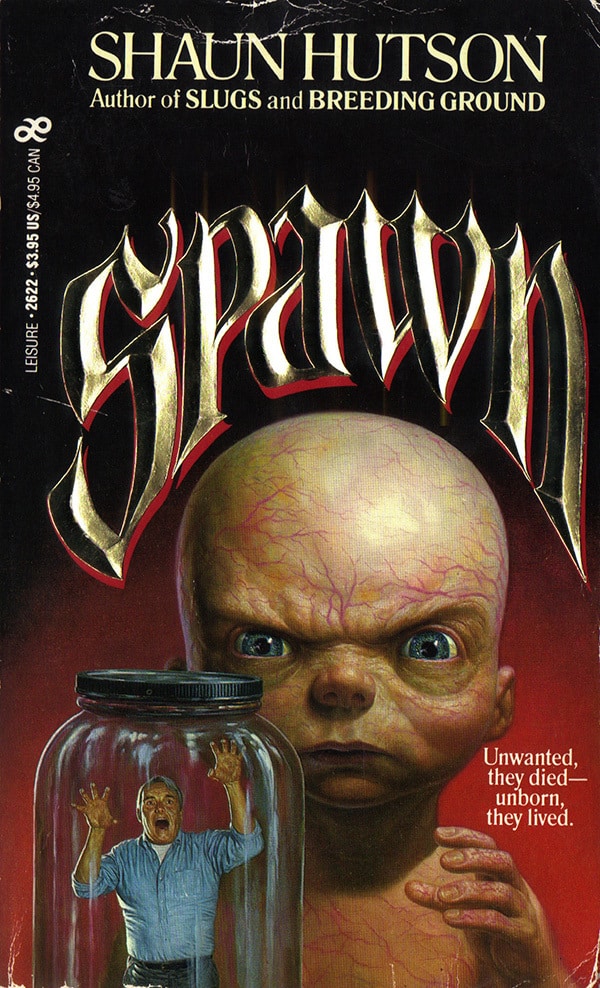
Spawn by Shaun Hutson.
In 2017, horror writer Grady Hendrix would pay tribute to these books with Paperbacks from Hell, examining both their covers and their stories, as well as the recurring tropes between them. Hendrix’s book caused a resurgence of interest in these old paperbacks, leading to a select few titles being reprinted by Valancourt Books in the years following.
Published under the Paperbacks from Hell label and handpicked by Hendrix, these books represent the cream of the crop for this era of horror lit. Fittingly, many of the books — whether simply mentioned in the pages of Hendrix’s book or directly reprinted by Valancourt — have been adapted into films over the years. Adapting stories of killer slugs, vengeful whales, and even a sociopathic dog, these 5 films are just as campy as their source material.
More than that, their existence paints a very different picture of the relationship between horror cinema and horror literature. Horror books can be just as schlocky as any good B movie. These 5 horror films, each based on a paperback from the ’70s and ’80s, proves it.
5) Slugs (1988)
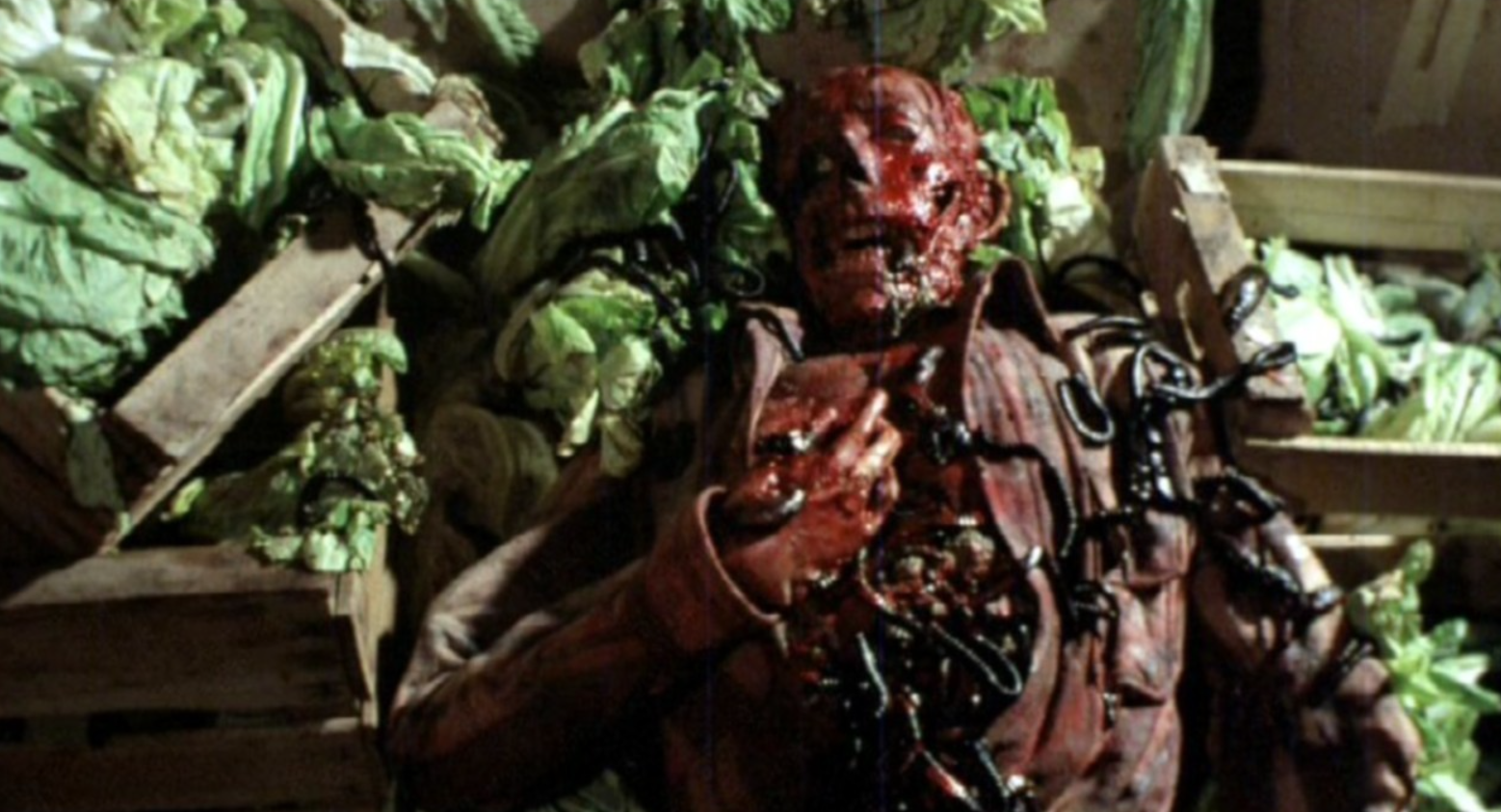
Dister Films
Juan Piquer Simón’s Slugs is exactly what it sounds like: a horror movie about killer slugs. But that’s okay. That’s all it really needs to be. Slugs adapts Shaun Hutson’s 1982 novel of the same name, in which a small town is overrun by slugs, who have turned carnivorous after exposure to toxic chemicals in the sewers. Hutson is a name that will be familiar to collectors of horror paperbacks, having also written titles like Spawn, The Skull, and Breeding Ground.
Slugs shines most in its use of practical effects, utilizing both real and fake slugs, such as in a close-up of one biting a victim. The ways the slugs consume their victims is visceral and gruesome. In one scene, a man drinks from slug-contaminated water, leading to blood gushing from his nose and eyes. It helps that slugs in general are gross to look at, and we get plenty of close-ups of them as they cover their victims’ bodies, literally tearing them apart.
Slugs ends with all but one of the slugs being destroyed, teasing a sequel that never came. It doesn’t really need one, however, as Slugs remains a fun standalone creature feature that will really get under your skin.
4) Orca (1977)
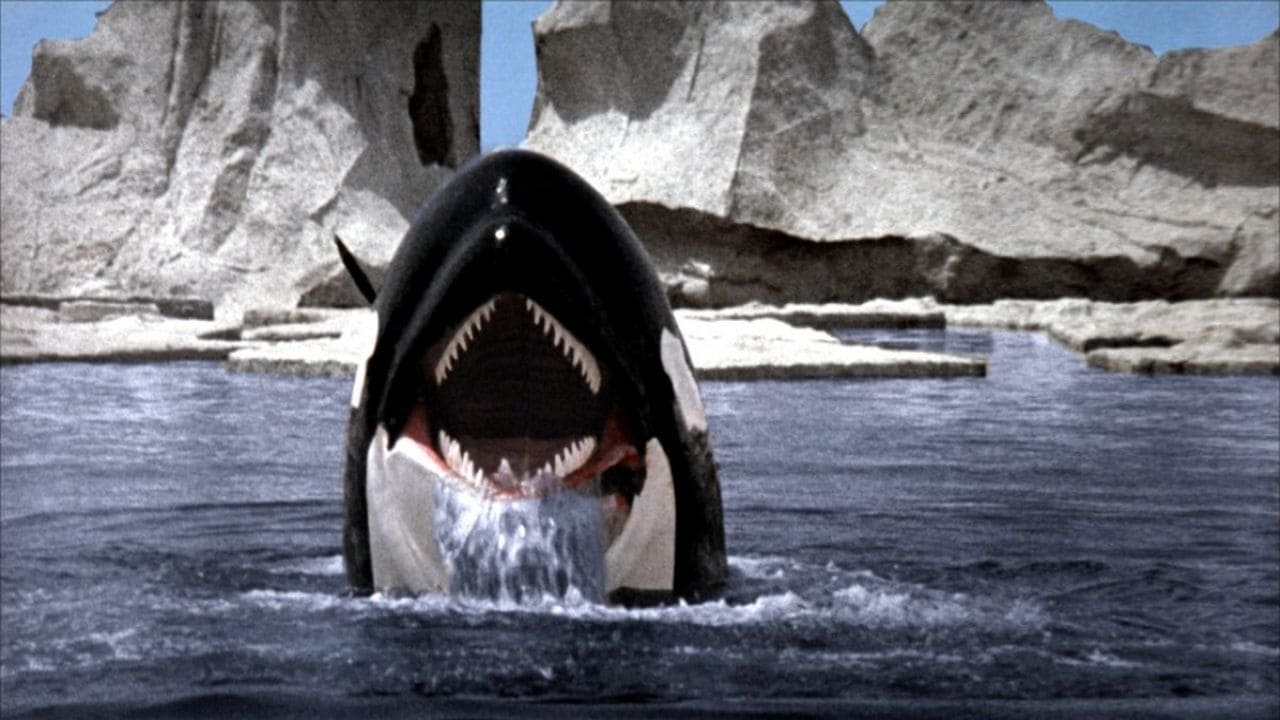
Paramount Pictures
On its surface, Orca might seem like a blatant Jaws rip-off, but make no mistake, this film’s horror is far more psychological. In fact, it has more in common with Moby Dick, centering on Nolan, a sea captain who accidentally kills an orca whale, leading to its vengeful mate hunting him down. Directed by Michael Anderson of Logan’s Run, Orca adapts the 1975 novel by Arthur Herzog, published only a year after Peter Benchley’s Jaws in 1974. When it comes to horror novels, Herzog has a few to his name, many of which lean into the same “ecological horror” as Orca, such as 1974’s The Swarm, which also received a film adaptation.
As such, the horror of Orca comes as much from Nolan’s guilt over his actions as it does the actual whale. The scene in which the orca is killed is harrowing, with emphasis placed on the almost human-like cries the animal makes as it dies. The remainder of Orca focuses on this sort of rivalry between Nolan and the orca’s mate, both being obsessed with the other, culminating in the death of both Nolan and the whale.
Though the film may have been commissioned to cash in on the success of Jaws, it feels less a monster movie and more a reminder not to mess with nature.
3) The Nest (1988)
Concorde Pictures
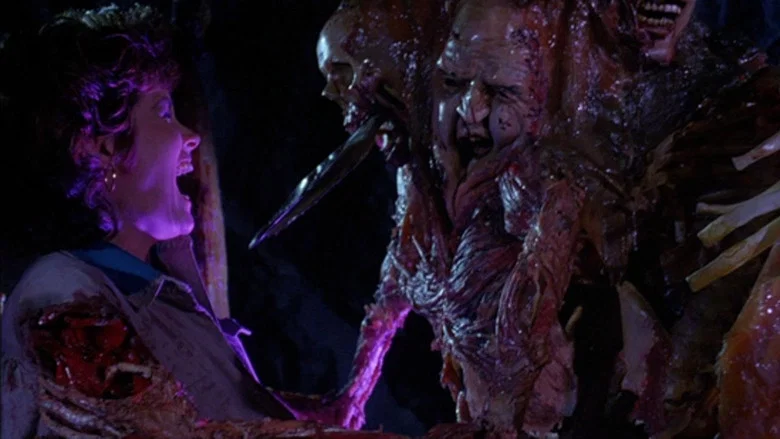
Continuing the trend of animals attacking humans, Terence H. Winkless’ The Nest centers on an island community that gets overtaken by killer cockroaches. Much like Slugs, The Nest relies on our aversion to insects to produce most of its horror. Indeed, the film is as gross as it is scary, cockroaches festering in every corner. In one scene. they invade a woman’s kitchen, crawling on top of food. As she kills them, they die with a loud splat, leaving stains of roach juice on the counter. And then there’s a scene where the roaches attack a woman in a leg cast, who remains helpless as the insects cover her.
The Nest adapts the 1980 novel of the same name by Eli Cantor, writing under the pseudonym of Gregory A. Douglas. In 2019, The Nest was chosen for reprint by Valancourt Books. In the new edition’s introduction, writer Will Errickson notes The Nest as being “right up there with [Jaws and The Rats]”, noting that within The Nest, no one is spared.
It’s true. And it’s true of the movie adaptation too. The roaches in The Nest feel unstoppable; which is fitting, given how nigh-indestructible the bastards are in real life. The most grotesque part of The Nest comes near the end, however, in which the audience is presented with the Queen Roach, a horrific hybrid of insect and human, composed entirely of corpses. It’s bits like this that help The Nest to stand out as more than just a creature feature, where it’s not just the roaches that are scary, but the notion they could become like us.
2) Wolfen (1981)
Warner Bros.
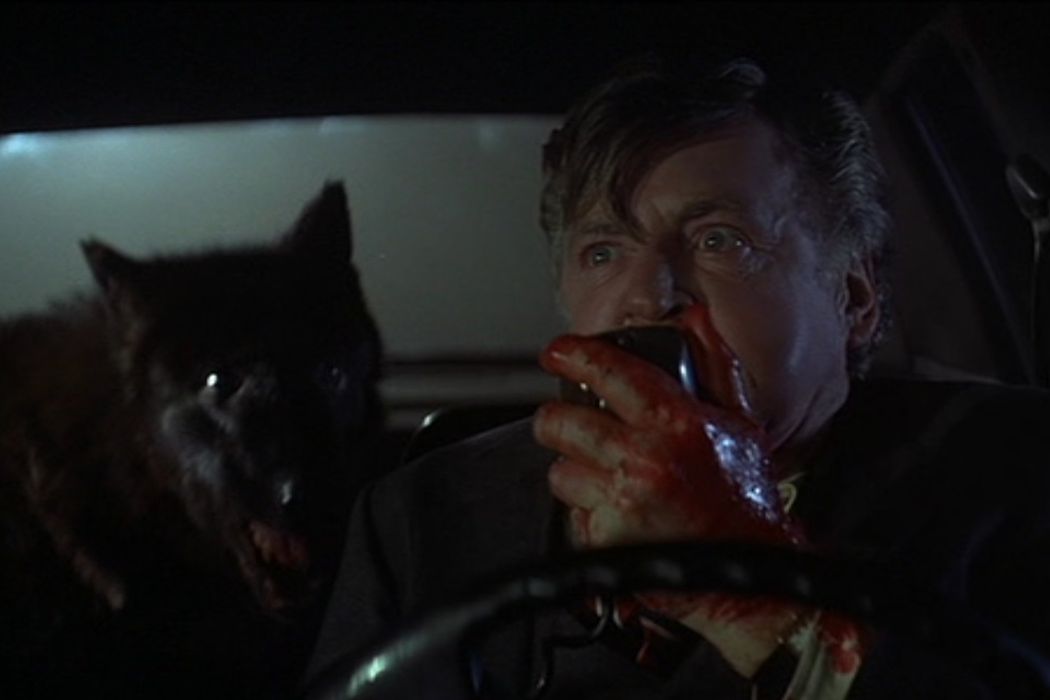
You might go into Wolfen expecting it to be a werewolf movie, but what you’ll get is far stranger. The film plays out like a gritty police procedural, focusing on NYPD Captain Dewey Wilson as he attempts to solve a series of animalistic murders. It’s through this that Wolfen is able to bring together the horror of the natural world with the urban setting of New York. It creates a nice juxtaposition between the two, especially as Wolfen takes viewers through the grimy streets.
Directed by Michael Wadleigh, Wolfen adapts Whitley Strieber’s 1978 novel, The Wolfen. An interesting character in his own right, Strieber also authored The Hunger in 1981, which was adapted into a film starring David Bowie in 1983. If you’re familiar at all with that movie, the same level of psychosexuality present in The Hunger is present in Wolfen, though it ends up taking a backseat to the film’s more spiritual themes.
The creatures within Wolfen feel more akin to the Indigenous Skinwalker than a traditional werewolf, with the titular Wolfen being a pack of wolf spirits rather than humans who transform. Throughout the film, the viewer is placed into the Wolfen’s perspective, which is shot like a thermal imaging camera. It helps to make The Wolfen feel like predators in this environment, and just one of the many things which make Wolfen a captivating watch. In comparison to other films on this list, it may be a bit slow, but in some ways, it’s in the film’s favor.
1) Baxter (1989)
MK2 Productions
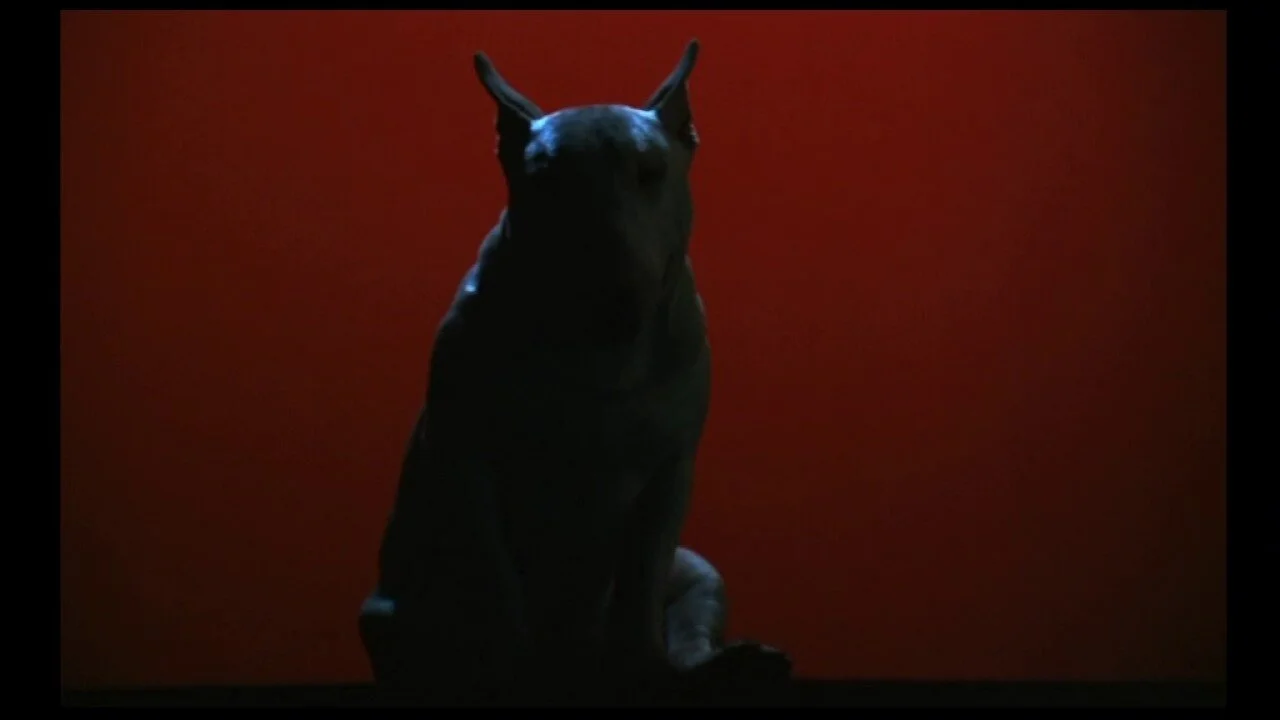
Jérôme Boivin’s Baxter is one of the most fascinating horror movies I’ve watched in recent years, and that’s largely because of its perspective. The film centers on a Bull Terrier named Baxter. Continually, the film takes us into Baxter’s thoughts, and his inner voice sounds more like a serial killer than what you’d expect a dog to be thinking. Baxter’s whole goal is finding a master to be obedient to. He starts off with the elderly Madame Deville, who Baxter despises for the fear she shows toward him. When Baxter kills the old woman, he’s taken in by a young couple before finally finding a master that’s just like him. That master is a young boy obsessed with Nazis, and who is very likely a sociopath in the making.
A French film, Baxter adapts Hell Hound, the 1977 novel by writer Ken Greenhall. Like The Nest, Hell Hound was selected for reprint in 2022. It’s not difficulty to see why, both Hell Hound and Baxter building terror through one of the strangest POVs imaginable. After all, it’s one thing to have a book about a killer dog, it’s another to humanize that dog and hear his thoughts.
Baxter ultimately ends with the young master killing his dog. As he dies, Baxter reflects: never be obedient. It’s a line which goes against everything the dog has said previously. Before this, Baxter seems to believe the whole purpose of a dog is to be obedient. Baxter’s ending calls all that into question, and by questioning the purpose of a dog, the film also questions our purpose as humans, especially in relation to animals.
A deeply surreal experience, Baxter is an underrated horror flick. It’s fitting that it’s based on such an underrated book, too.







‘Just Deserts’ Production Wraps as New Trailer Teases a Dark Mystery Inside a Car Trunk

‘Dexter: Resurrection’ Season 2 Teaser Brings the Killer Back for a Halloween Premiere

Apple TV+’s Widow’s Bay Leads the Emmys With 8 Wins Ahead of Primetime Ceremony

R.L. Stine’s Pumpkinhead 2 – First Look at Cassandra “Elvira” Peterson in Tubi’s Halloween Sequel

‘Godzilla Minus Zero’ Trailer – The King of the Monsters Falls From the Sky in Epic New Footage

Starting Small: The Independent Roots of Five of Horror’s Greatest Filmmakers

V/H/S (2012) and The Art of YouTube Horror

Dive Into the Lovecraftian Nightmare of ‘The Sinking City 2’ in New Trailer [Watch]

‘Insidious: Possession’ Exclusive Trailer – The Asylum’s Horror Mockbuster Arrives This Week

‘Insidious’: NECA Unleashes Terrifying Lipstick-Face Demon Action Figure
‘Just Deserts’ Production Wraps as New Trailer Teases a Dark Mystery Inside a Car Trunk
‘Dexter: Resurrection’ Season 2 Teaser Brings the Killer Back for a Halloween Premiere
‘Godzilla Minus Zero’ Trailer – The King of the Monsters Falls From the Sky in Epic New Footage

‘Vincent Must Die’ – French Horror Movie Getting a Blumhouse Atomic Monster Remake
