
Editorials
Body Horror Explained: Why We Can’t Look Away (Most Disturbing Scenes Ranked)

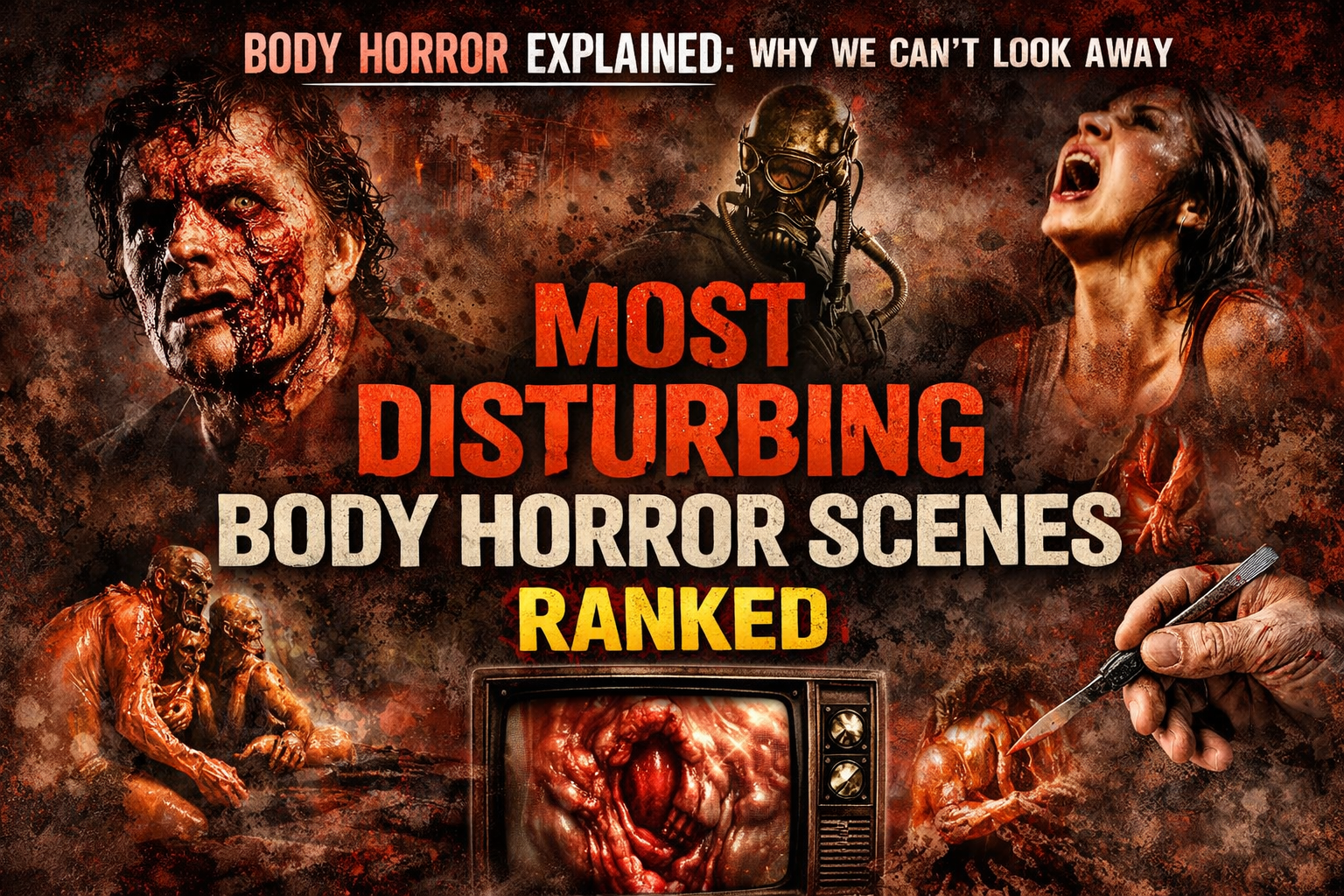
Body horror is one of the most disturbing and unforgettable subgenres in horror—but what exactly makes it so hard to watch… and even harder to look away from?
From grotesque transformations to extreme physical mutations, body horror films tap into a deep, universal fear: losing control of your own body. Whether it’s flesh merging, skin tearing, or identity dissolving, this genre pushes boundaries in ways few others can.
In this guide, we break down what body horror is, why it’s so effective, and rank the most disturbing body horror scenes of all time.
What Is Body Horror?
Body horror is a subgenre of horror that focuses on the graphic transformation, mutilation, or destruction of the human body.
Unlike traditional horror, which may rely on supernatural threats or external killers, body horror turns you into the horror.
Common themes in body horror include:
- Uncontrollable physical transformation
- Disease, infection, and parasites
- Loss of identity or humanity
- Mutation caused by science or technology
- Extreme gore and practical effects
Classic examples include films like The Fly (1986), Videodrome (1983), and The Thing (1982)—all of which redefine what the human body can become.
Why Body Horror Is So Disturbing
Body horror hits differently because it’s deeply personal.
You can escape a killer. You can wake up from a nightmare. But you can’t escape your own body.
That’s what makes it terrifying.
1. Fear of Losing Control
Your body is supposed to belong to you. Body horror flips that idea—showing what happens when it doesn’t.
2. Violation of the Human Form
We’re wired to recognize what a body should look like. When that’s distorted, it creates instant discomfort.
3. Pain That Feels Real
Unlike supernatural horror, body horror often feels grounded. The suffering looks tangible—and believable.
4. Morbid Curiosity
Even when it’s disgusting, we watch anyway. Body horror lives in that space between fascination and repulsion.
The Evolution of Body Horror Films
The body horror genre has evolved significantly over the decades, shifting in style, tone, and meaning.
1980s: The Golden Age of Practical Effects
Directors like David Cronenberg defined the genre with films such as The Fly and Videodrome, using practical effects to create visceral, unforgettable transformations.
2000s: Shock and Extremity
Films like Saw and Hostel pushed boundaries with torture-based horror, focusing more on physical endurance and brutality.
2010s–Now: Elevated & Psychological Body Horror
Modern films like Titane and Raw blend body horror with deeper themes—identity, sexuality, and technology—making the genre more layered and symbolic.
Most Disturbing Body Horror Scenes (Ranked)
Here are some of the most disturbing body horror moments ever put on screen, ranked by impact, originality, and sheer discomfort.
10. Tusk (2014) – The Walrus Transformation
A man surgically turned into a walrus. Absurd, yes—but the loss of humanity makes it deeply unsettling.
9. Slither (2006) – Infection and Expansion
Parasitic invasion leads to grotesque physical distortion. It’s messy, painful, and impossible to ignore.
8. The Human Centipede (2009) – The Experiment
One of the most infamous concepts in horror history. The simplicity of the idea makes it even worse.
7. Society (1989) – The Shunting Scene
Melting bodies and merging flesh create one of the strangest and most disturbing finales ever filmed.
6. The Thing (1982) – Chest Defibrillator Scene
A shocking, violent moment that still stands as one of the best practical effects sequences in horror.
5. Titane (2021) – Transformation and Identity
A modern take on body horror that blends physical change with psychological and emotional themes.
4. The Fly (1986) – Seth Brundle’s Decay
A slow, tragic transformation that shows the horrifying breakdown of the human body over time.
3. Raw (2016) – The Finger Scene
Simple but deeply disturbing. Its realism makes it hit harder than most extreme gore.
2. Martyrs (2008) – The Final Act
Relentless, brutal, and emotionally exhausting—this pushes body horror into psychological territory.
1. Videodrome (1983) – “Long Live the New Flesh”
The ultimate body horror moment. Flesh and technology merge into something completely inhuman.
Why We Can’t Look Away From Body Horror
So why do people keep watching body horror movies—even when they’re uncomfortable?
Because they force us to confront things we try to avoid:
- Mortality
- Physical vulnerability
- Loss of identity
- The limits of the human body
Body horror doesn’t just scare you—it stays with you.
It lingers in your mind, makes your skin crawl, and challenges what you think it means to be human.
And that’s exactly why it works.
Final Thoughts
Body horror is more than just gore—it’s one of the most psychologically effective forms of horror ever created.
Whether it’s classic Cronenberg or modern experimental films, the genre continues to evolve while pushing boundaries that most filmmakers wouldn’t dare cross.
If you’re a true horror fan, body horror isn’t just something you watch—it’s something you experience.
If you liked this editorial, make sure to check out some more here!









‘Mommy’s Home’ – ‘Lights Out’ Director David F. Sandberg Unveils Chilling New Horror Movie

Ryan Gosling’s ‘Ghost Rider’ Movie Sets Summer 2028 Theatrical Release

‘Crawlers’ Trailer Unleashes a Terrifying Spider Infestation This October

‘Godmother’ – First Look at Jacksepticeye and Alanah Pearce’s New Horror Movie

‘IT: Welcome to Derry’ Renewed for Season 2 at HBO — New Season Set in 1935

‘Fall 2: Deadpoint’ Trailer Takes the Terror 5,000 Feet Above Thailand

She Wakes Up Bound Inside a Car Trunk – Does She Deserve to Die?

Starting Small: The Independent Roots of Five of Horror’s Greatest Filmmakers

‘Werwulf’ – Robert Eggers’ Haunting New Werewolf Poster Is Absolutely Stunning

Larry Fessenden Leads a Twisted Cult in Disturbing ‘Blood Shine’ Trailer

Dive Into the Lovecraftian Nightmare of ‘The Sinking City 2’ in New Trailer [Watch]

‘Insidious: Possession’ Exclusive Trailer – The Asylum’s Horror Mockbuster Arrives This Week

‘Monster: The Lizzie Borden Story’ Teaser Unleashes Infamous Axe Murderer on Netflix This September

Eva Green’s Psychological Horror ‘Trees Are Watching’ Heads to TIFF This September
