
Editorials
More than the Wolf Man: The Other Werewolves of Horror’s Golden Age
Before Universal’s The Wolf Man defined the rules of lycanthropy, horror’s Golden Age was filled with strange, forgotten werewolves. Explore the lesser-known monsters, cursed creatures, and hidden gems that helped shape werewolf cinema.

Spoilers ahead.
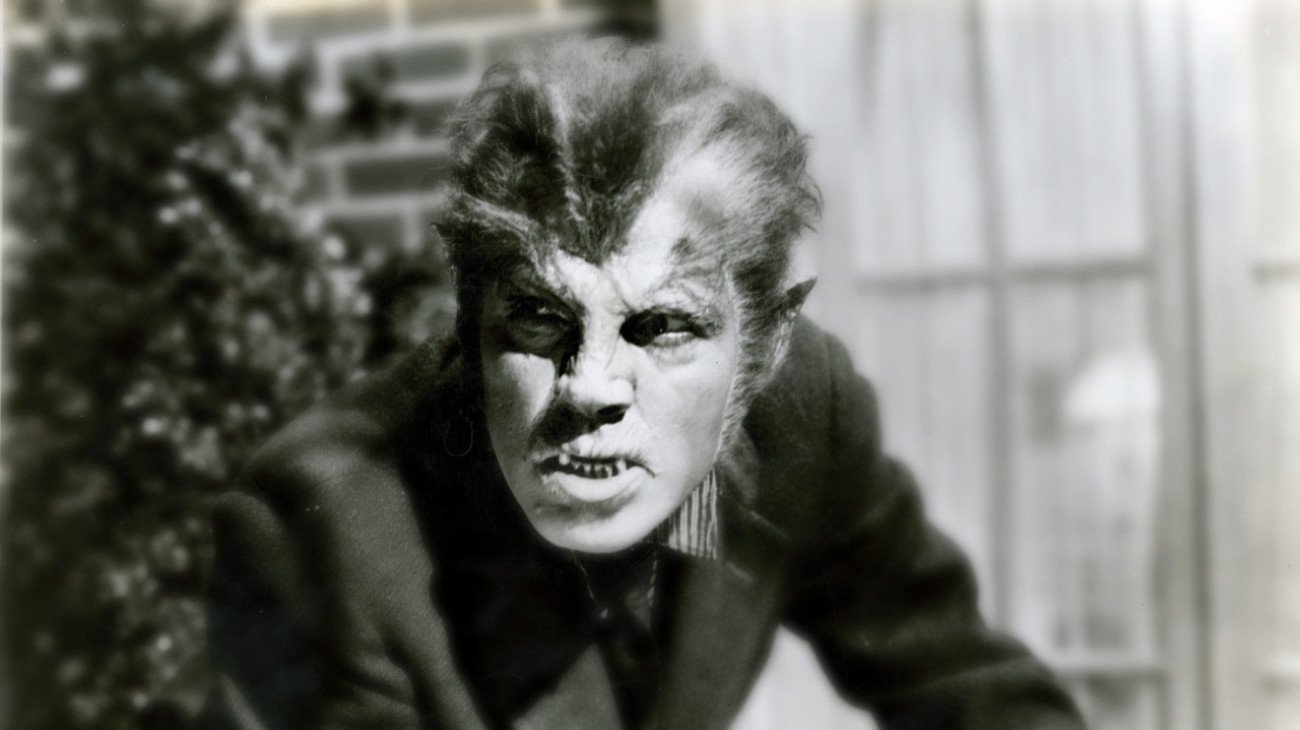
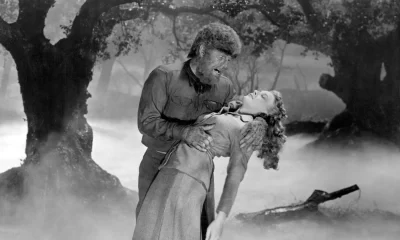
While screenwriter Curt Siodmak didn’t invent the werewolf film with 1941’s The Wolf Man, he can certainly be said to have perfected it. Though transformations based on the lunar cycle and an aversion to wolfsbane are present in lycanthropic lore dating back to Ancient Greece, elements like the werewolf’s weakness to silver bullets were invented for the film.
Throughout the 1930s and into the 1940s, major and independent studios alike sought to replicate Universal’s Frankenstein and Dracula cycles with knock-off mad scientist and vampire films. Unlike Frankenstein or Dracula, the werewolf was a concept, and a concept couldn’t be copyrighted, meaning that while Lon Chaney Junior’s Larry Talbot is the most famous of the classic werewolves, he is not the only one. These lesser lycanthropes are fascinating because they demonstrate a monster whose “rules” have not been codified: werewolf films abide by Siodmak’s template even today, these films deviate from it in unexpected and often creative ways.
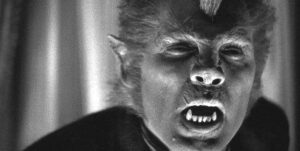
The titular Werewolf of London is decidedly less lupine than audiences would come to expect.
The list actually begins with two films that predate The Wolf Man, with this first coming from Universal itself: 1935’s Werewolf of London. Reputedly conceived as a vehicle for Boris Karloff, Werewolf of London has much in common with Siodmak’s Wolf Man, but with key differences. Henry Hull’s titular werewolf, Doctor Wilfred Glendon, spends the entire film trying to cultivate a rare flower that temporarily cures lycanthropy. When transformed, Glendon bears closer resemblance to Mister Hyde than a traditional werewolf, retaining enough intelligence to don a disguise that enables him to move through the fog-shrouded London streets unnoticed.
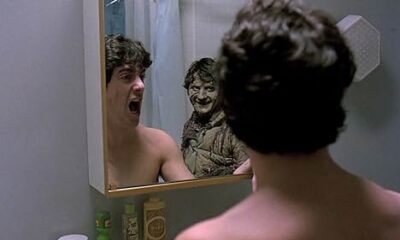
Besides the MacGuffin flower “Mariphasa lupina,” introduces another touch of werewolf lore that never quite took: “the werewolf instinctively seeks to kill the thing it loves best,” as cured werewolf Dr. Yogami (Warner Olland) warns Dr. Glendon. This puts Glendon’s lovely wife Lisa (played by Bride of Frankenstein’s Valerie Hobson) at risk, and inspires Glendon to lock himself away in his country estate to keep her out of harm’s way. Shame she follows him there to see what’s wrong, necessitating Glendon’s dispatch at the hands of friend and colleague Paul Ames (Lester Matthews) – no silver bullets needed. Still in his transformed state, Glendon speaks to Paul before dying in another unique touch. Though not called out explicitly as The Wolf Man and The Curse of the Werewolf are, one gets the impression John Landis had this ending (and the warning that “ “the werewolf instinctively seeks to kill the thing it loves best”) in mind for the climax of his An American Werewolf in London.
The film is best remembered today for its werewolf, sporting a reduced, more subtle make-up design than the later Wolf Man. Though no photographs of it have ever emerged, it’s been rumored for decades that Universal make-up maestro Jack Pierce designed a Wolf Man-like make-up for the film, and Henry Hull insisted on it not being used. There are two contrasting explanations for this: the prevailing narrative was that Hull refused to sit in the make-up chair for a more elaborate appliance; recently Hull’s nephew, Cortlandt Hull, has suggested it was because there are scenes in which Dr. Glendon’s friends and family recognize him even when transformed. Hull insisted on the reduced make-up in order to make this more plausible.
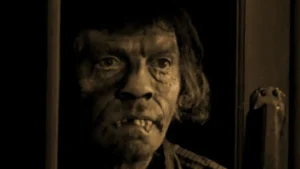
The “werewolf” of 1939’s The Face at the Window was played by character actor Harry Terry to preserve the film’s mystery.
British horror film The Face at the Window also predates The Wolf Man, designed as a vehicle for “Mister Murder” Tod Slaughter, the country’s first true horror star. Slaughter is most famous as the screen first Sweeney Todd, originating the character in 1936’s Sweeney Todd: The Demon Barber of Fleet Street. In The Face at the Window, Slaughter is Chevalier Lucio del Gardo, a thief and killer who disguises himself as “the Wolf” to commit his crimes. Based on an 1897 stage melodrama, The Face at the Window shares elements of its plot with many other films of the period – one of which we’ll arrive at later in the article.
Mysteries and thrillers of the era liked to throw out a supernatural red herring early, only to reveal the more grounded truth at the climax, invariably discovered by a laconic, staunchly skeptical detective. Most famously, this trick is employed by Tod Browning’s legendary lost film London After Midnight and its 1935 remake, Mark of the Vampire.
This leaves the Werewolf of London the only true werewolf of the thirties, though several would come in the forties in The Wolf Man’s footsteps (or pawprints, as it were). The first of them, The Mad Monster, is a “poverty row” quickie produced by the Producers’ Releasing Corporation (PRC), and best remembered as fodder for an early episode of Mystery Science Theater 3000. It was shot in two weeks, and features a werewolf created by science gone too far, rather than a supernatural curse. A mad scientist (George Zucco, of course) injects Glenn Strange (later Frankenstein) with an experimental serum made from wolf’s blood, which he hopes to use to create super-soldiers to fight the Nazis. Incidentally, this plot of werewolf super-soldiers sounds much more interesting than The Mad Monster.
It is at this point worth noting that werewolves are expensive. Unlike zombies or vampires, werewolves require a more involved effects team, and costly, time-consuming make-up. When werewolf make-up is phoned-in, the result is The Mad Monster, whose ill-fitted hairpiece and snaggleteeth do little to instill fear.
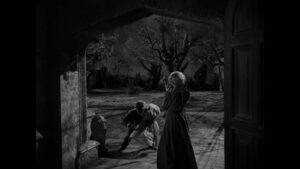
The werewolf of Fox’s 1942 horror The Undying Monster is seen mostly in wide shots like this one.
20th Century Fox, who never really showed much interest in capitalizing on the horror craze, kept the star of their film The Undying Monster out of sight for much of its scant sixty-two minute runtime. The film was adapted from a well-selling novel, and follows an affluent English family living under the werewolf’s curse at their country estate. It adopts the Agatha Christie-esque set-up of the werewolf (their identity unknown) picking off victims on the requisite dark and stormy night. The film is actually darned good, boasting better than expected characterization. Its heroines in particular have far more agency and personality than many of their contemporaries. Its werewolf is decent when shown, similar to the better-known werewolf Andreas (Matt Willis) from Columbia’s 1943 film The Return of the Vampire.
Designed and marketed as an unofficial sequel to Dracula (even casting Bela Lugosi in its starring role), The Return of the Vampire swapped Renfield for Andreas, a werewolf under legally-distinct-from-Dracula’s hypnotic thrall. Lugosi is “Armand Tesla,” a vampiric count stalking London, defeated during the First World War, and revived by unwitting cemetery workers when his body is uncovered by Nazi bombing decades later. Andreas is the most compelling character in the film, battling to be free of Tesla’s malign influence and working to help destroy the vampire for good. If The Undying Monster is underrated, The Return of the Vampire is a minor classic, boasting higher-than-average production values, a solid script, and good performances. The werewolf make-up is solid, though seeing everyone else’s middling efforts to replicate Jack Pierce’s seminal work just makes you appreciate Pierce that much more.
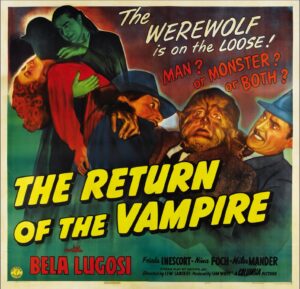
Though the title promises a vampire, the advertising for Columbia’s The Return of the Vampire plays up its werewolf.
The follow-up pseudo-sequel to The Return of the Vampire fares much, much worse. 1944’s Cry of the Werewolf is a dull, paint-by-numbers whodunit, taking The Undying Monster’s premise of a detective investigating murders that seem to have been committed by a werewolf and dragging it out into tedium. The film runs just north of an hour, but feels significantly longer. Insult to injury, the horror is kept off-screen, and Cry of the Werewolf foregoes a make-up monster altogether and chooses to just use a live, trained wolf as its werewolf. This incidentally makes the film historically significant, serving as the first instance of the full man-into-wolf transformation that reappears in later werewolf films like Wolfen and The Company of Wolves, as opposed to Jack Pierce-esque wolf-men.
There was a preoccupation with werewolf psychology in the werewolf movies of the forties. Even The Wolf Man casts doubt on if Larry Talbot’s transformation is only in his mind – a holdover from Siodmak’s original script, which intended for the Wolf Man to never clearly be shown on screen. Universal’s 1946 film She-Wolf of London takes this to its logical extreme: there is no werewolf. A young woman is gaslit by a scheming relative into thinking she’s succumbed to a family lycanthropic curse, and has committed a series of grisly murders. The conniving relative is the real killer, and everything is revealed to be part of an inheritance dispute in a tidy, underwhelming resolution.
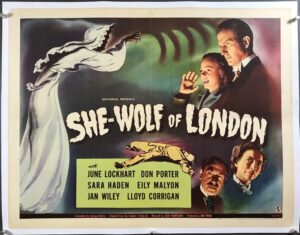
The poster for She-Wolf of London set this author and decades of other horror fans up for disappointment.
Today, She-Wolf of London is most notable for inspiring an in-name-only Halloween Horror Nights character at Universal, which reimagined the “She-Wolf” as an actual werewolf, and for disappointing countless fans over the decades with a title that promised more than the film delivered. The fact that even this film, a programmer quickly devised by Universal to pad out a double bill, maintains a cultural footprint is a testament to the lasting influence of golden age horror. Obscurities like these secure their place in horror history by helping to inspire iconic films decades later. The next time you’re chilled by David Naughton’s transformation into An American Werewolf in London, remember that the title might not even have occurred to John Landis if Henry Hull hadn’t barred his fangs fifty years earlier.









‘It Ends’ Final Trailer Takes Us on a Nightmarish Road Trip Into Existential Horror

‘Insidious 6’ Director Jacob Chase Returns to Blumhouse and Atomic Monster for New Horror ‘Sleepover’

‘The Institute’ Season 2 First Images Preview the Next Chapter of Stephen King’s Horror Series

New ‘Crystal Lake’ Image Teases Pamela Voorhees’ Descent Into Darkness

‘Black Mirror’ Season 8 Is Now in Production With New Episodes

‘Fall 2: Deadpoint’ Trailer Takes the Terror 5,000 Feet Above Thailand

Starting Small: The Independent Roots of Five of Horror’s Greatest Filmmakers

V/H/S (2012) and The Art of YouTube Horror

5 New Horror Movies Just Released to Watch at Home

Dive Into the Lovecraftian Nightmare of ‘The Sinking City 2’ in New Trailer [Watch]

‘Insidious: Out of the Further’ Opens With $25.3 Million at the U.S. Box Office

Ruth Wilson Is Terrifying in Creepy New ‘Family’ Trailer

‘Monster: The Lizzie Borden Story’ Trailer Unveils Sarah Paulson as Aileen Wuornos

‘P.T.’-Inspired Psychological Horror ‘T.W.I.R.L.’ Now Haunting Steam [Trailer]
