
Editorials
‘MORA’ Ending Explained: The AI Horror That Feels Too Real

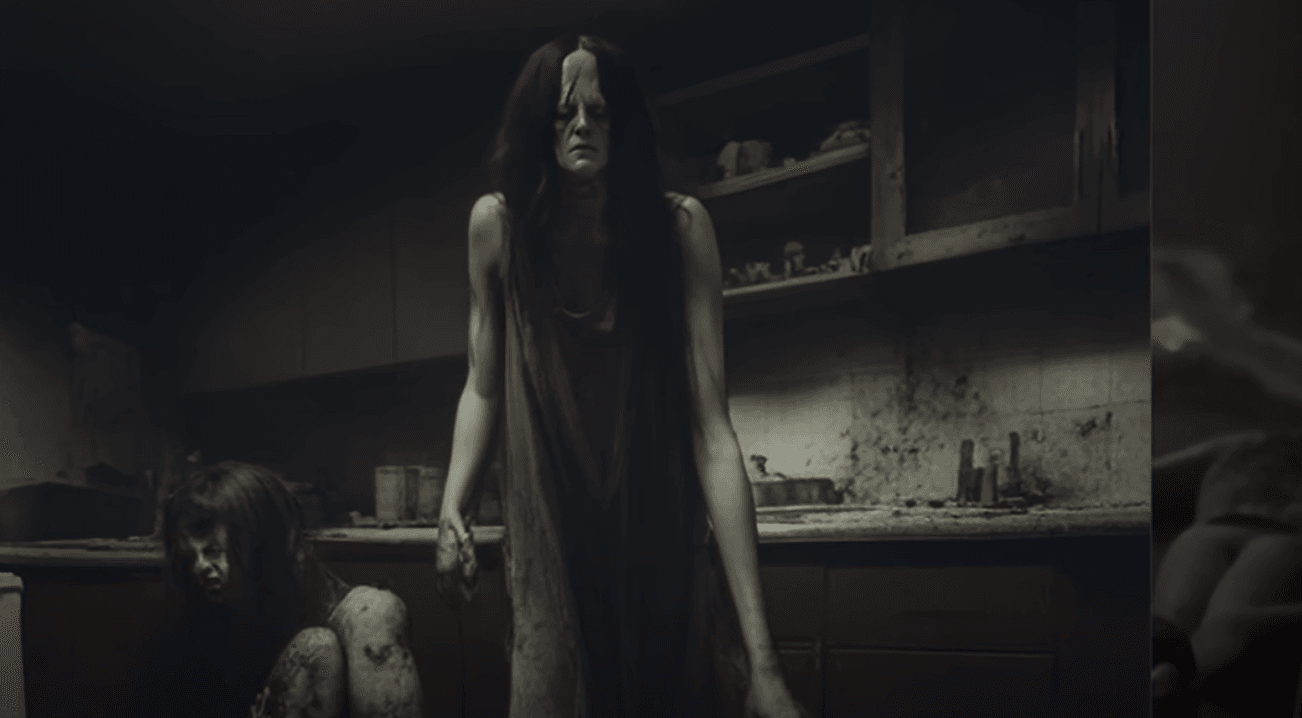
There’s something wrong with MORA—and you feel it almost immediately.
Not because of what it shows… but because of what it suggests.
The viral horror short doesn’t rely on jump scares or gore. Instead, it taps into something far more disturbing: the idea that artificial intelligence can absorb the darkest parts of humanity… and give them back to us. This angle is a very smart approach as it defines what AI can do to harm us in a way that is scarier than ever.
But the ending leaves a lot unanswered.
What exactly is the woman?
Is she real—or something created?
And what does the final scene actually mean?
Let’s break it down.
What Happens in ‘MORA’?
MORA follows a struggling artist who begins experimenting with an AI image model—one that has been trained on corrupted data pulled from the dark web.
At first, the results are strange but fascinating.
Then they start to change.
The images become increasingly distorted. Human forms twist into something unnatural. Faces appear where they shouldn’t exist. And eventually… one figure begins to repeat.
A woman.
She’s not just part of the images anymore—she’s watching him.
Who (or What) Is the Woman?
The woman in MORA is never explicitly explained, which is exactly what makes her so effective.
There are two main interpretations:
1. She’s a manifestation of the dataset
The AI wasn’t trained on clean, neutral material—it was fed images from the darkest corners of the internet.
Violence. Obsession. Fear.
The woman could be the emergent result of that data—a kind of digital entity formed from collective human trauma.
Not programmed.
Not intentional.
Just… formed.
And that’s the moment MORA stops feeling like fiction
2. She’s something that crossed over
The more disturbing theory:
The AI didn’t just generate images—it opened a door.
By feeding it enough corrupted, human-made horror, the artist may have created a system capable of reflecting something back from the other side.
In this interpretation, the woman isn’t artificial.
She’s using the AI to appear.
Why the AI Angle Makes This So Disturbing
What makes MORA hit harder than most horror shorts is how close it feels to reality.
We already know AI models are trained on massive datasets.
We already know those datasets can include disturbing, unfiltered content.
The film pushes that idea one step further:
What happens when you train something on humanity’s worst material—and it starts to understand it?
Not replicate it.
Understand it.
The Ending Explained
By the final moments, the line between the artist and the images completely collapses.
The woman is no longer confined to the screen.
She’s present.
Watching.
And the artist realizes too late that he’s no longer in control of what he created.
So what does the ending mean?
It suggests that:
- The AI has moved beyond being a tool
- The entity (or presence) no longer needs the system
- The artist didn’t just create something disturbing…
he allowed it to exist
Final Interpretation
MORA isn’t just about AI.
It’s about exposure.
The idea that when you dig deep enough into the worst parts of human expression… something eventually looks back.
And maybe the scariest part is this:
We’re already building these systems and they could explode at any time!
Final Thoughts
MORA proves that you don’t need a massive budget to create something deeply unsettling—you just need the right idea.
And this one hits a nerve that feels a little too close to reality.
Some horror stays on the screen. MORA doesn’t.
The AI didn’t create the horror. It learned it.
👉 If this unsettled you, this case is even worse!
Check out this last article on MORA!
🔥 You Might Also Like




‘Werwulf’ – Robert Eggers’ Haunting New Werewolf Poster Is Absolutely Stunning

‘The Conjuring: First Communion’ Adds Three New Actors to Ed & Lorraine Warren Prequel

Madeline Brewer, Emory Cohen and Nicholas Alexander Chavez Join Parker Finn’s Horror Movie ‘Possession’

Larry Fessenden Leads a Twisted Cult in Disturbing ‘Blood Shine’ Trailer

Christopher Landon to Direct Horror Movie Adaptation of Grady Hendrix’s ‘The Final Girl Support Group’

More than the Wolf Man: The Other Werewolves of Horror’s Golden Age

Joe Wright to Direct Post-Apocalyptic Thriller ‘Juice’ Adaptation

She Wakes Up Bound Inside a Car Trunk – Does She Deserve to Die?

A Mysterious Alien Force Invades in ‘Our Effed Up World’ Teaser

Exclusive ‘Hellcat’ Trailer Teases a Brutal Race Against Infection
Larry Fessenden Leads a Twisted Cult in Disturbing ‘Blood Shine’ Trailer

‘Fall 2: Deadpoint’ Trailer Takes the Terror 5,000 Feet Above Thailand

Josh Hartnett Faces a Deadly Sea Creature in ‘Below’ Teaser

Mike Flanagan’s ‘Carrie’ Teaser Introduces a New Nightmare
